The public pages and docs of nerudo.dev, in six languages
The home, about, security, pricing and explore pages and the docs reader now render in English, Simplified Chinese, Traditional Chinese (Hong Kong), Mexican Spanish, Malay or Tamil, chosen by ?lang=, the picker's saved choice or the browser's languages.
Recorded product walkthrough
nerudo.dev used to be English only: <html lang="en"> was hard-coded and every interface string was an English literal. The home, about, security, pricing and explore pages and the documentation reader now render in English, 简体中文, 繁體中文 (香港), Español (México), Bahasa Melayu or தமிழ். The repository, pull request, task, account and blog pages are not translated yet and stay entirely in English.
All six figures are signed-out captures of production taken on 2026-11-05. Four are headless browser screenshots of public pages. The capture browser sends an English Accept-Language, so those pages were opened with ?lang=. Two are terminal captures of curl fetching public pages from a clean shell with no cookies.
How a page picks its language
The server reads the language once per request, in this order: ?lang=, then the nerudo_lang cookie that the language picker sets, then the browser's Accept-Language, then English. Chinese tags that name Traditional script or Hong Kong, Macau or Taiwan get Traditional Chinese, other Chinese gets Simplified, and any Spanish gets es-MX. Traditional Chinese pages carry lang="zh-Hant-HK" so that browsers and the font stacks pick Hong Kong glyph forms. A list of routes in src/i18n/routes.ts decides which pages may render in the reader's language. Every other route renders entirely in English, <html lang> included, and the picker tells the reader in their language that the page isn't translated yet. Fetching /privacy and /blog with Accept-Language zh-HK returned lang="en" and that notice.
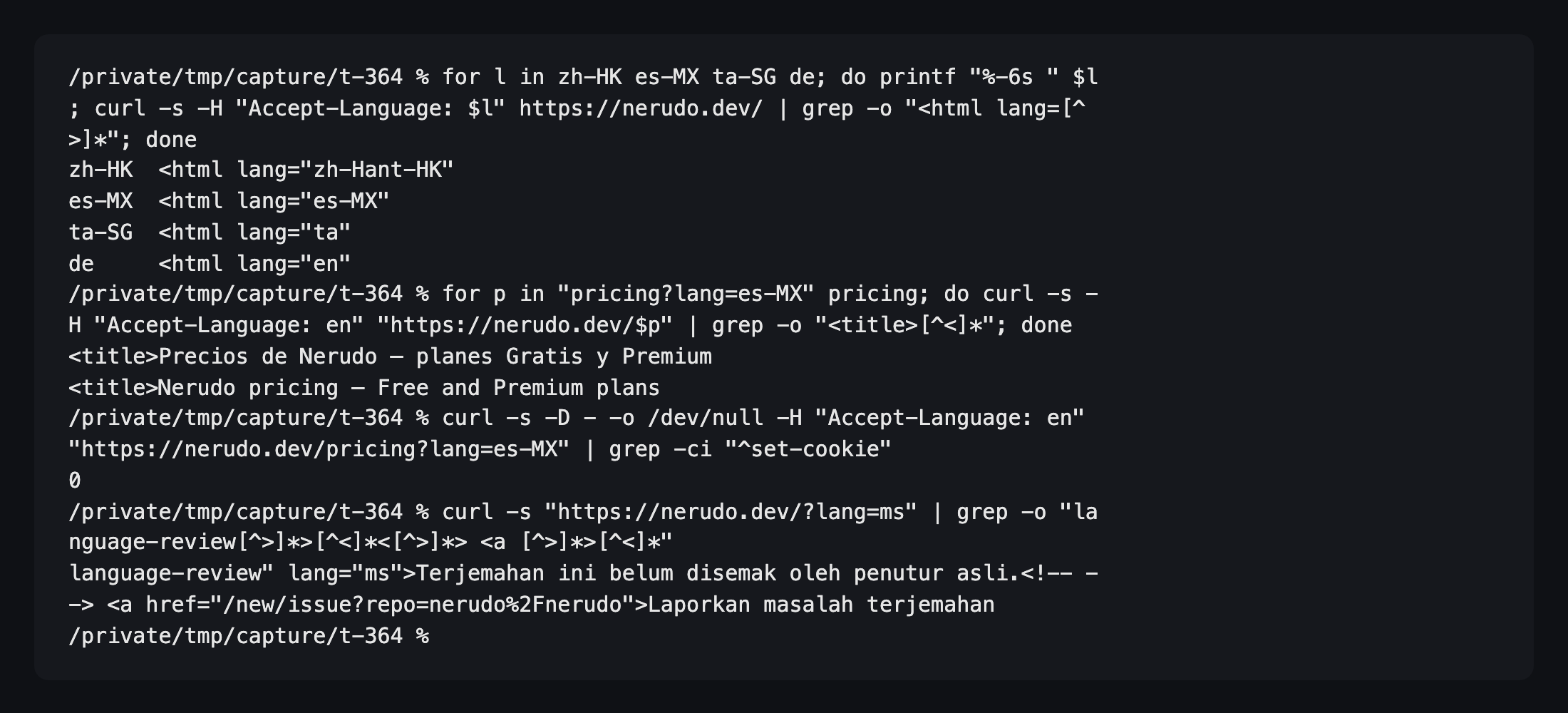
In the first figure, Accept-Language zh-HK, es-MX, ta-SG and de return the home page as zh-Hant-HK, es-MX, ta and English. With an English browser, /pricing?lang=es-MX has a Spanish title and plain /pricing the English one. The ?lang= response sets no cookie, so a shared link leaves the reader's saved choice alone. The last command finds the picker's note on the Malay home page: no native speaker has reviewed the translation yet, followed by a link to report a problem.
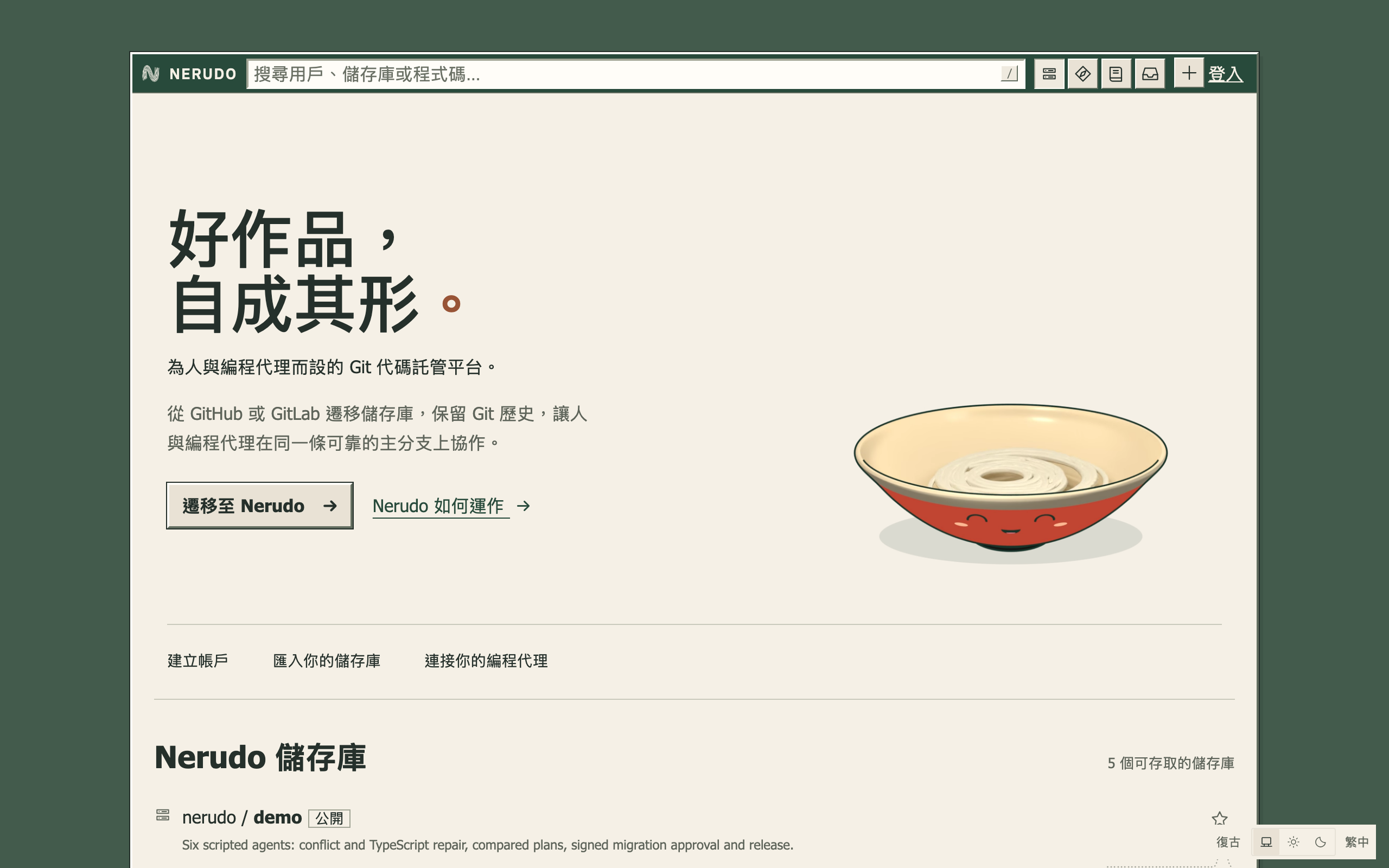
In the home page in Traditional Chinese, the toolbar, search placeholder, sign-in link and headings are translated. Repository names and descriptions are user content and stay as written. The picker is the word 繁中 at the bottom right, at the end of the preference strip.
Catalogs and the check behind them
Interface text lives in src/i18n/catalog/. Each key is typed as a record over all six languages, so leaving one out is a TypeScript error. Templates take {name} placeholders, plurals go through Intl.PluralRules, and links inside a sentence use tags. Numbers and prices go through Intl with the page's language tag, while English output stays as it was. Failed community and search requests now carry codes, and a translated page maps each code to catalog text instead of matching English sentences.
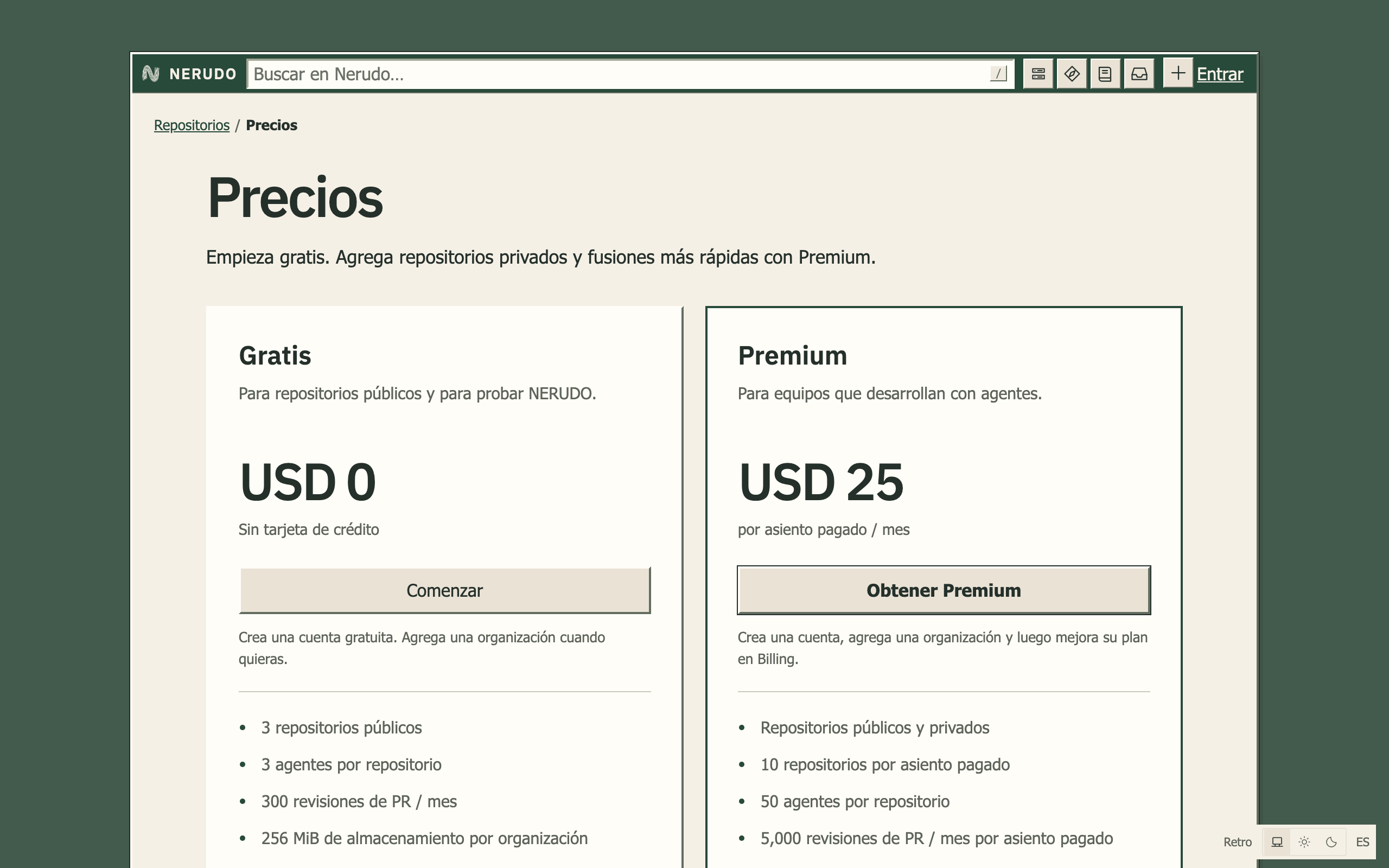
The pricing page in Mexican Spanish writes prices as "USD 25", because "$" there means pesos, and groups 5,000 with a comma. "Billing" stays English inside a Spanish sentence, marked lang="en", because the billing page isn't translated yet.
tests/i18n-hardcoded.test.ts parses every .tsx file under app/ and src/ and fails on English text written straight into JSX, naming the file and line. Files not yet migrated are listed in tests/i18n-baseline.json with string counts that may only go down; at the deployed commit it lists 71 files and 1,983 strings. Chinese and Tamil text uses system fonts chosen by :lang(), such as PingFang HK or Noto Sans Tamil; the Latin brand fonts are unchanged.
The documentation
The guides stay in nerudo/docs. Each language's guides sit at the English paths under translations/<id>/, and a translation.json names the navigation and records the SHA-256 of the English text each translation was made from. A translated guide takes the English headings' anchors by position when the heading levels match, so links into it work in every language. A translation older than its English guide says so and links to the English page. Search builds one index per language.
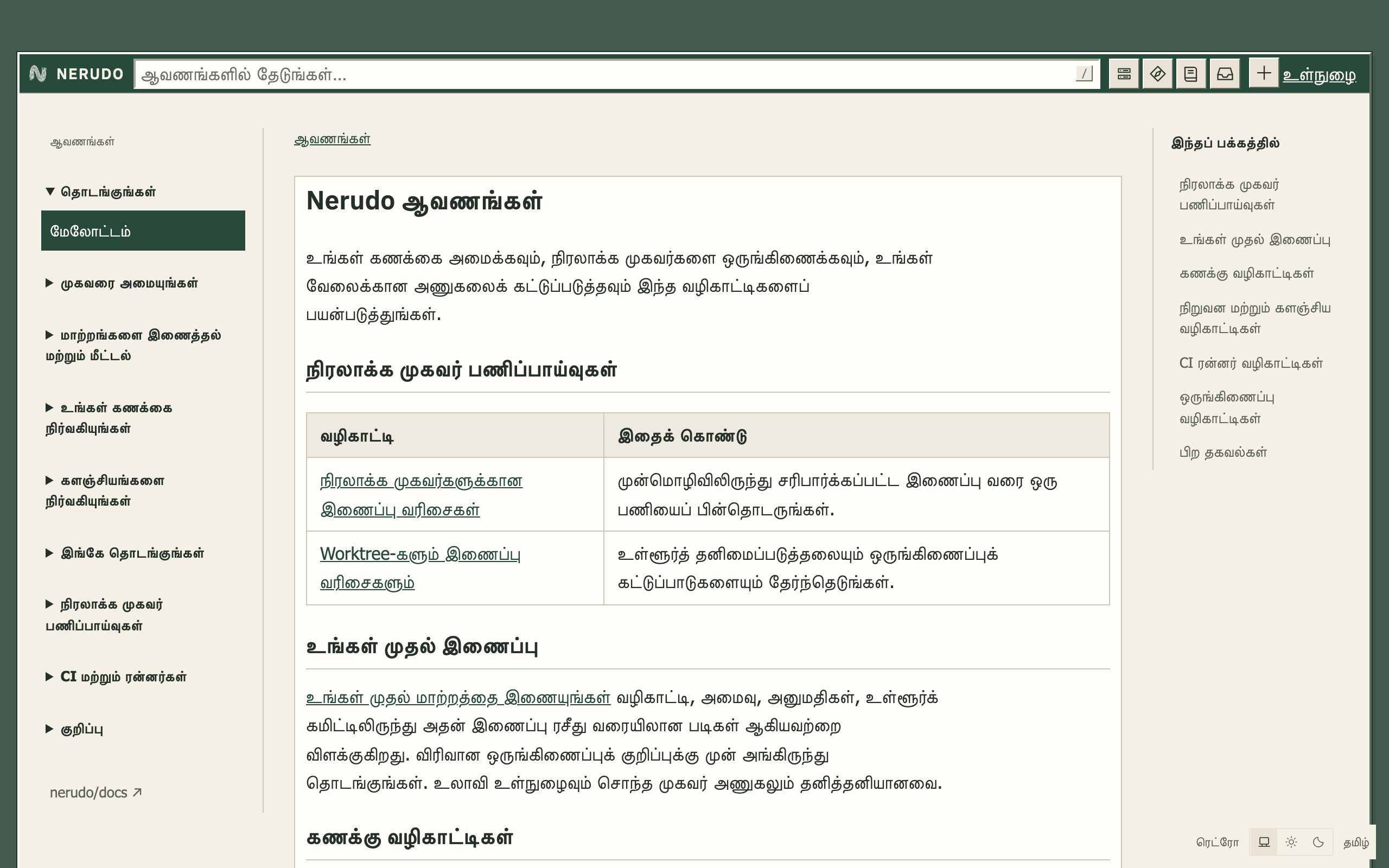
The docs home in Tamil: navigation, table of contents and guide text are translated.
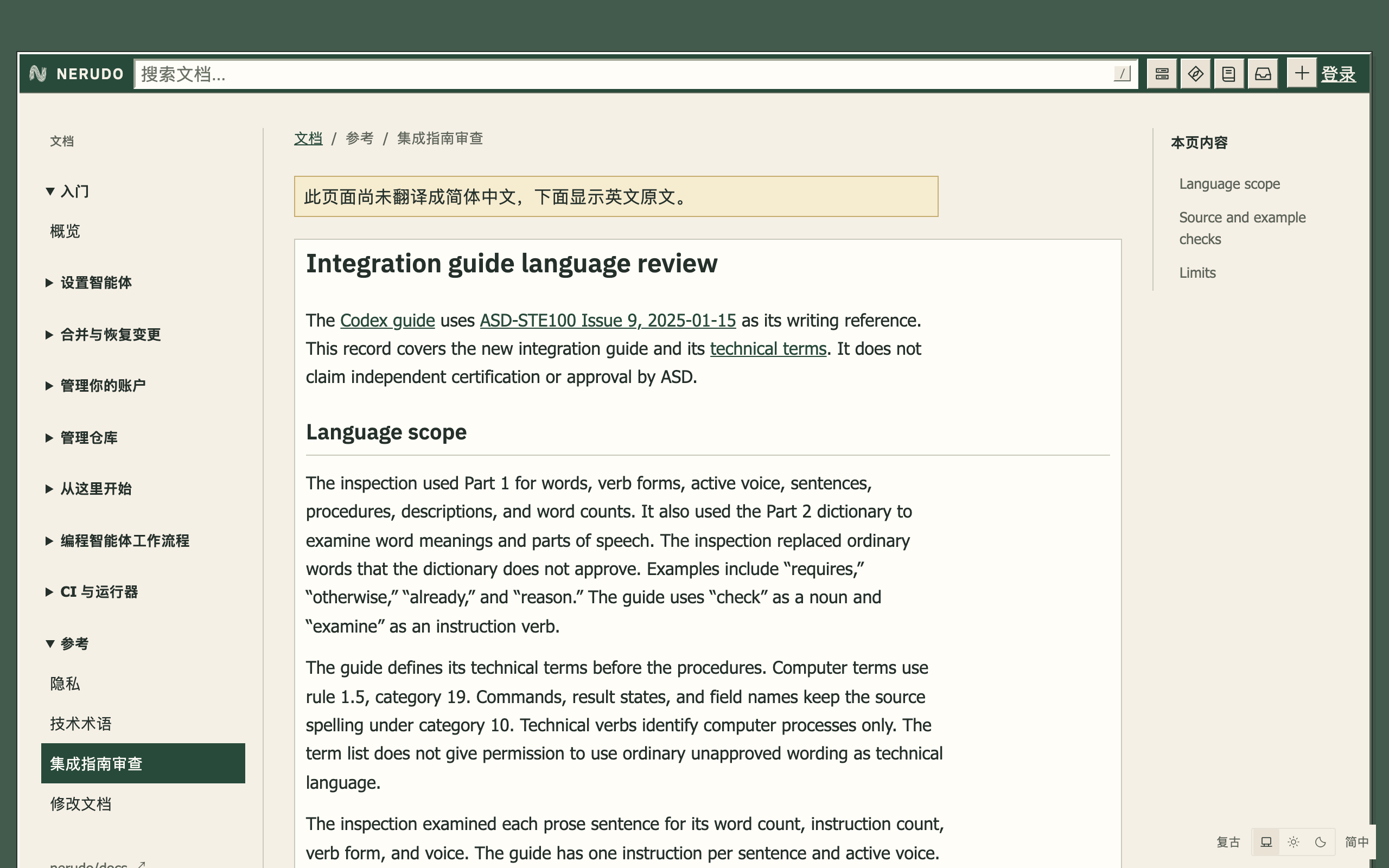
A guide with no Simplified Chinese version shows in English under a Simplified Chinese notice, with Chinese navigation around it. In the production sitemap, two guides appear only in English; every other guide is listed as its English URL and five translations.
What search engines see
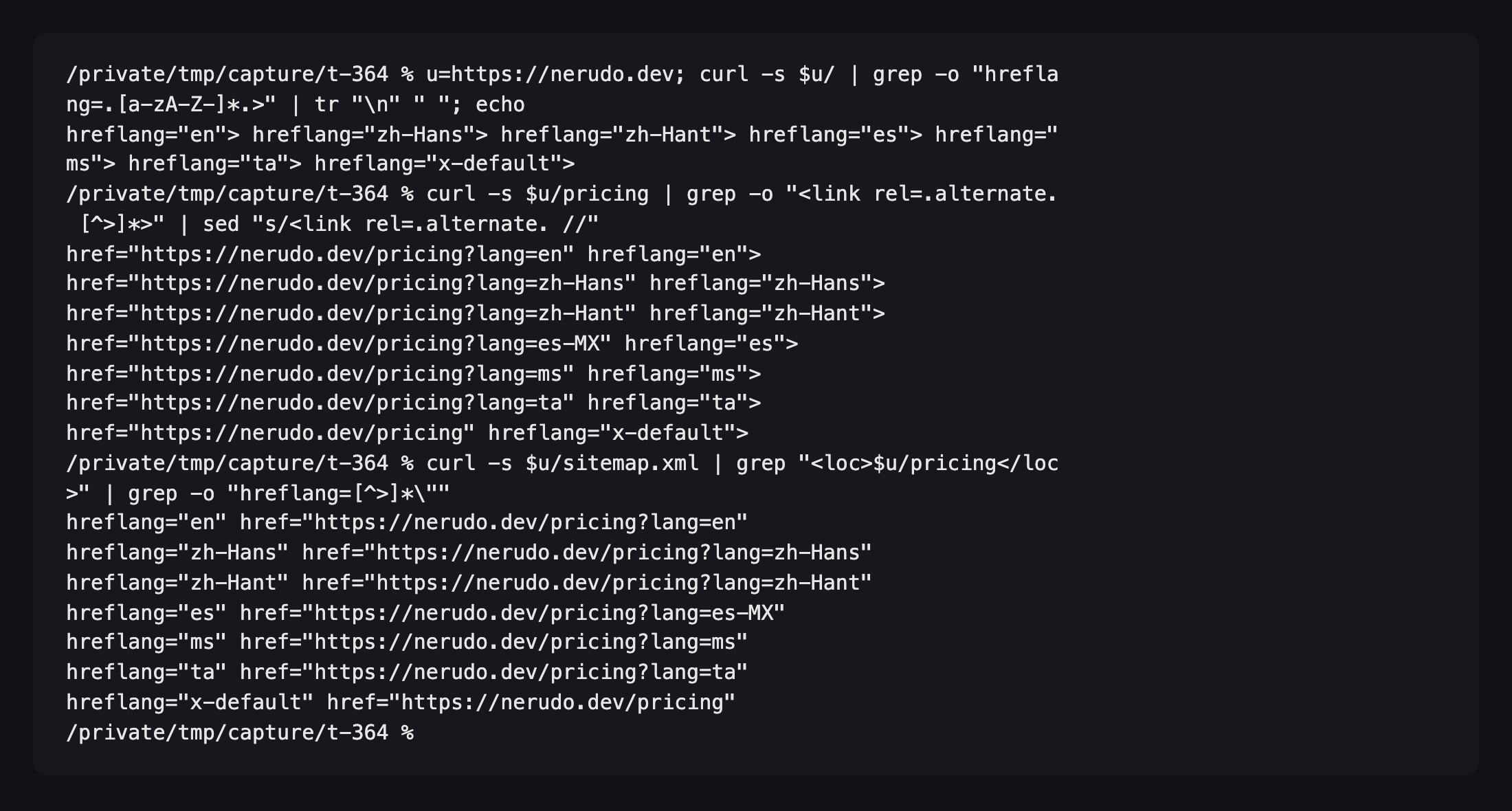
The home page and /pricing each list rel="alternate" links for the six languages plus x-default, the bare URL that follows the reader's language. The hreflang values name language and script without a region, so any Spanish reader is matched with es-MX. The sitemap entry for /pricing carries the same alternates, and each language version is also its own sitemap URL.
Limits
An agent wrote the translations into the repository. No native speaker has reviewed any of the five, and the picker says so in each. Only the routes named above are translated, and the CLI, the MCP servers and the API's error text stay in English. The figures don't show the picker open, the saved choice surviving a reload, the Modern appearance or a phone layout. None of the captured pages shows a date or a relative time, so their formatting isn't claimed here. The CI check is described from the code and was not run for this post. The fonts depend on the reader's system.
Walkthrough details
Signed-out captures of production on 2026-11-05: headless browser screenshots of public pages opened with ?lang=, and terminal captures of curl fetching public pages from a clean shell with no cookies. No signed-in page, account or local run is shown.
- Fetch the home page with Accept-Language zh-HK, es-MX, ta-SG and de and read <html lang>.
- With Accept-Language en, fetch /pricing?lang=es-MX and /pricing, read both titles, and count Set-Cookie headers on the ?lang= response.
- Fetch /?lang=ms and read the picker's review note and its report link.
- Screenshot /?lang=zh-Hant, /pricing?lang=es-MX and /docs?lang=ta signed out.
- Screenshot /docs/reference/integration-guide-review?lang=zh-Hans, a guide with no Simplified Chinese version.
- Fetch the home page, /pricing and /sitemap.xml and list their hreflang alternates.
Captured · Product view · Verification source