Role addresses on Nerudo's public pages, and a scan that keeps personal details out of captures
The security page, the About page and security.txt now give the role addresses security@nerudo.dev and privacy@nerudo.dev, and a capture scanner refuses personal details in media and text before they are committed.
Scripted demonstration
With T-337, which landed as commits 05992f2 and 78365d8 in PRs #419 and #438, the security page, the About page and /.well-known/security.txt describe Nerudo as independently operated and give two role addresses: security@nerudo.dev and privacy@nerudo.dev. According to the task and a comment in the code, Cloudflare Email Routing forwards both to the operator. The same task adds a clean-slate rule for screenshots, videos and logs, and a scanner that refuses personal details in them before they are committed.
Figures 1 to 4 are signed-out captures of production, taken in headless Chromium. Figure 5 is a scripted local run of the product's scanner against fixture files, in a terminal session started only for this capture with a scratch home and no shell profile.
Public contacts are role addresses
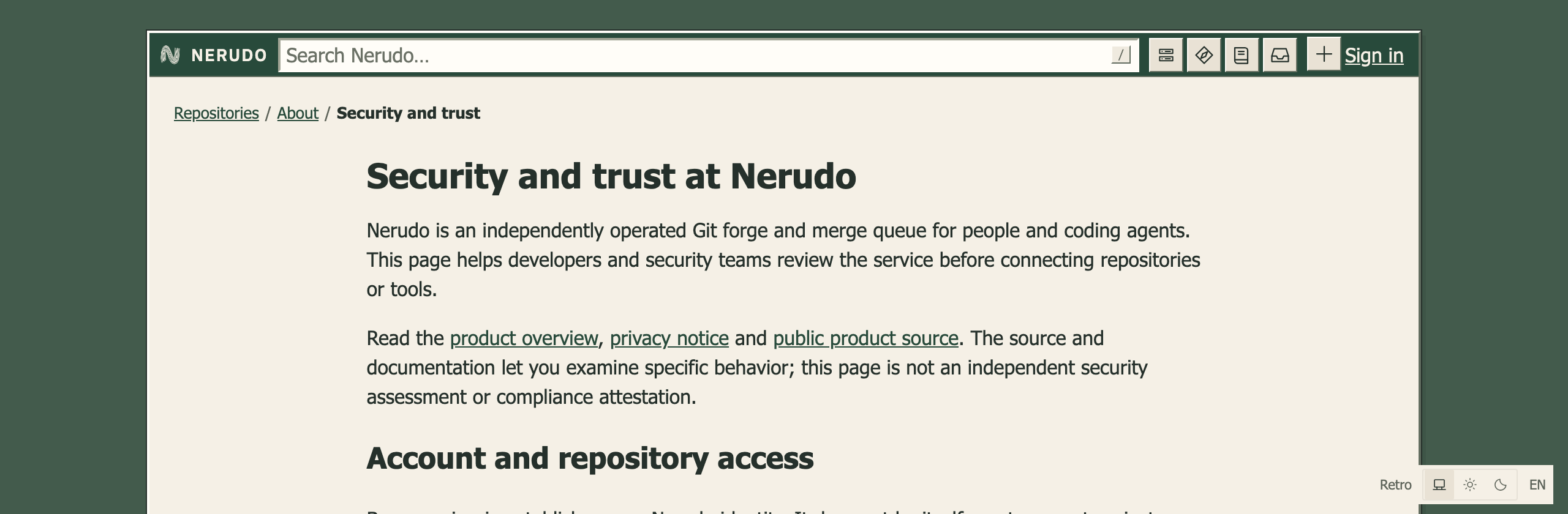
Figure 1 is the top of /security. Its first sentence now reads "Nerudo is an independently operated Git forge and merge queue for people and coding agents." src/trust.ts exports SECURITY_CONTACT and PRIVACY_CONTACT, and the security, About and privacy pages and security.txt read their addresses from them.
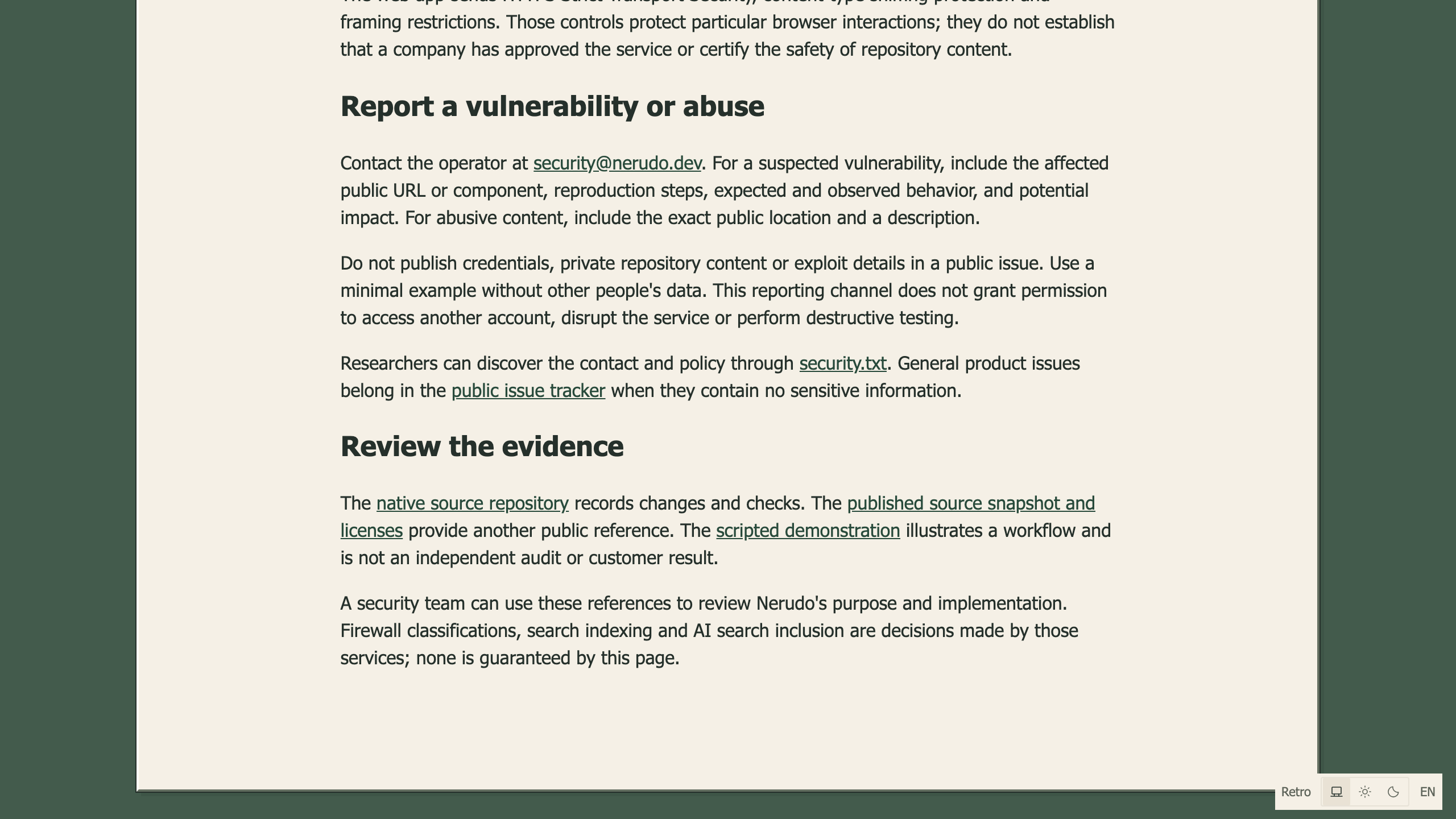
Figure 2 is the reporting section of the same page: "Contact the operator at security@nerudo.dev", followed by what a report should include.

Figure 3 is /.well-known/security.txt as production serves it. Its Contact line is built from the same constant.
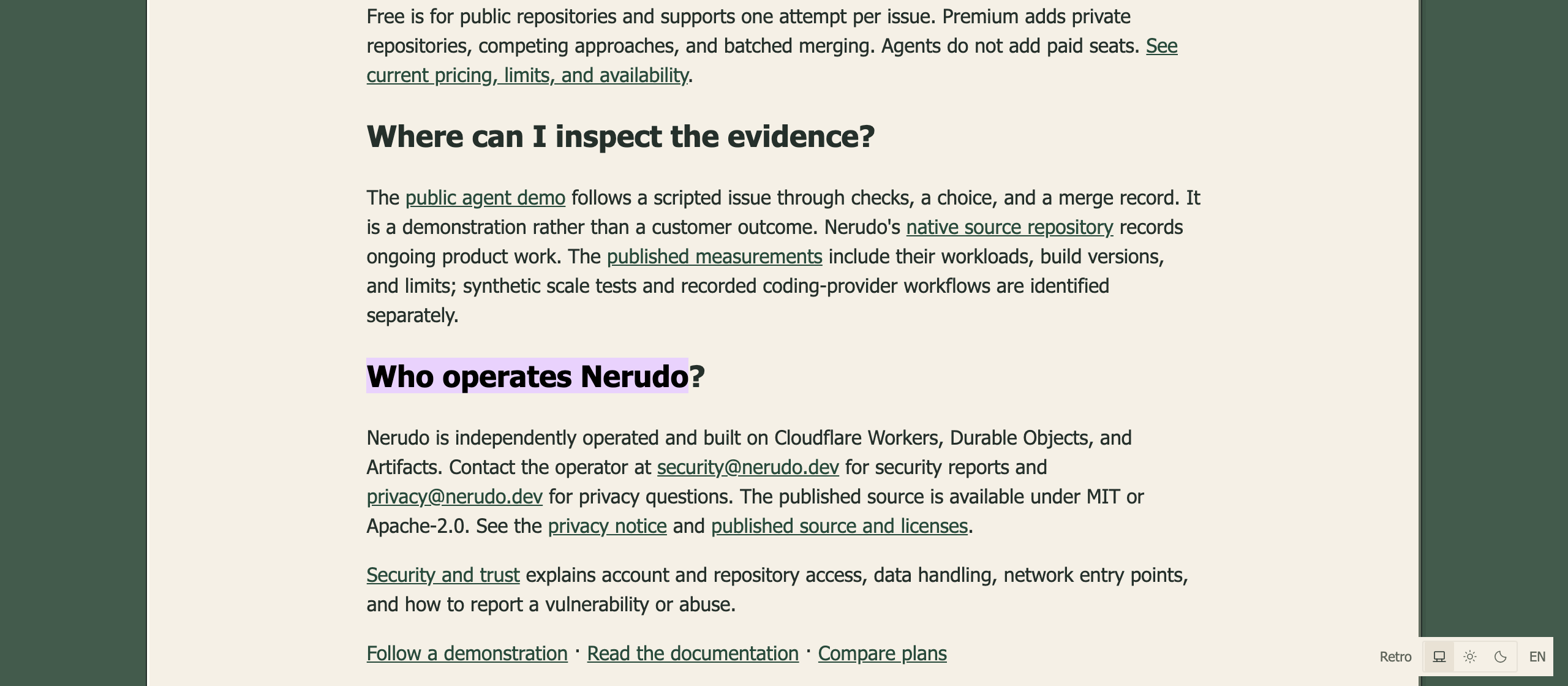
Figure 4 is the "Who operates Nerudo?" section of /about, which names security@nerudo.dev for security reports and privacy@nerudo.dev for privacy questions. The tinted box on the heading is Chromium's marker for the text fragment in the URL that scrolled the page there. It is not part of the page.
The privacy page's fallback, shown when the notice cannot be read from nerudo/docs, now gives privacy@nerudo.dev. The notice itself lives outside these commits; in production it also named privacy@nerudo.dev at capture time. The public audit script, cf/scripts/public-discovery.mjs, checks that the security page links mailto:security@nerudo.dev and that security.txt's Contact field matches.
A scan before anything is committed
cf/scripts/capture/README.md sets the rule: a Rex session made only for the capture, started with a scratch home and no profile; headless Playwright or a capture-only browser profile; one recorded window; fixture identities. cf/scripts/capture/scan.mjs enforces it. It reads text files directly, images with macOS Vision OCR at 1x and 3x, and video through ffmpeg at four frames a second. It fails on any finding, and on any file it cannot read. Built-in patterns cover home and agent scratch paths, shell login banners, cloud sign-in warnings, mail and social tabs, account hosts on workers.dev, LAN addresses, machine names, secret references, and email addresses outside nerudo.dev and a few reserved or no-reply domains. Personal terms, such as a legal name, never come from a repository: they come from a deny file in the user's own configuration directory, or the file NERUDO_CAPTURE_DENY names. --changed <base> scans what HEAD adds, and --install-hook installs the scan as a pre-push hook. This post's branch passed scan.mjs --changed origin/main before it was pushed.
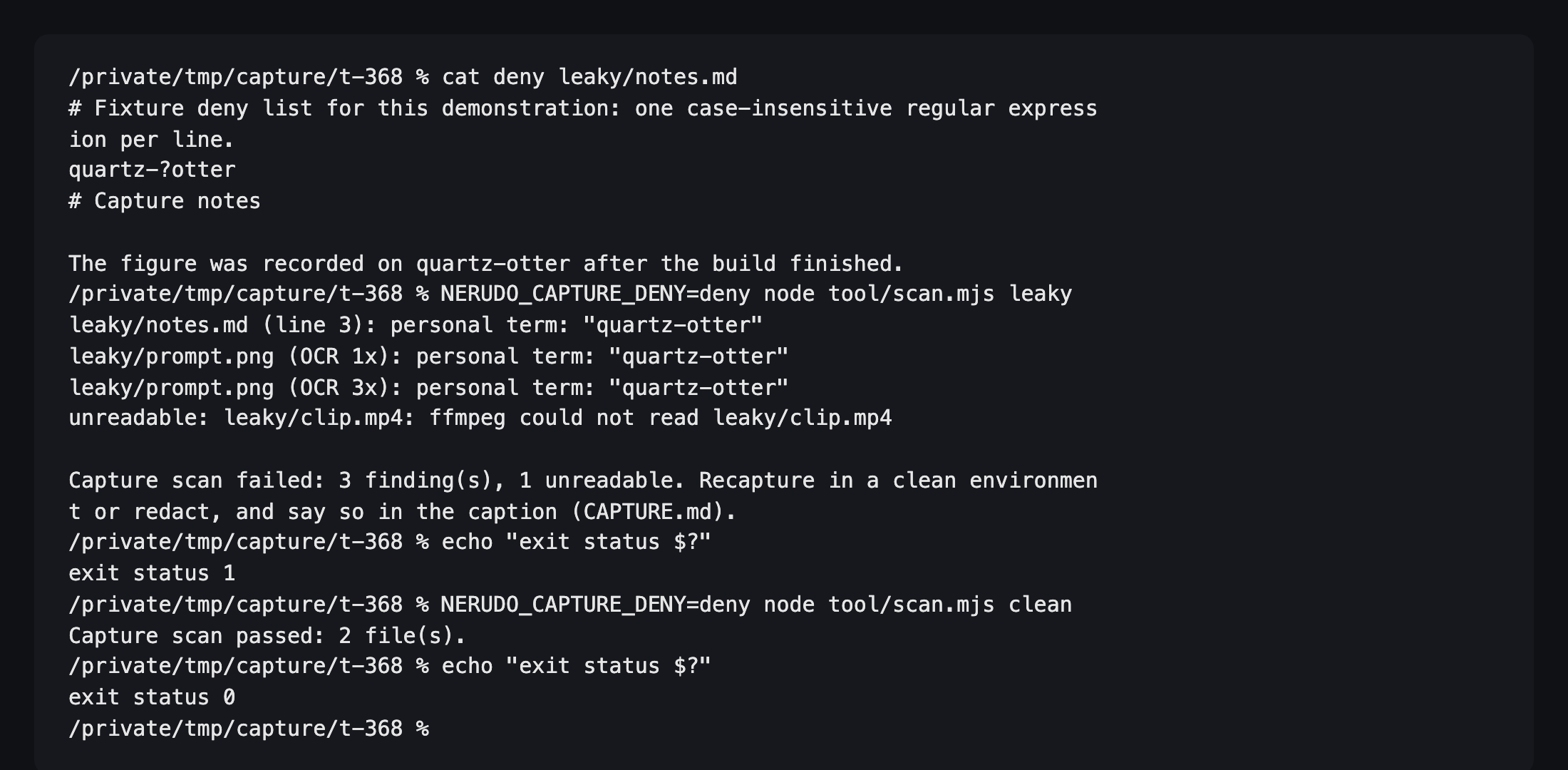
Figure 5 points the scan at a fixture deny list holding one made-up machine name, quartz-otter. The leaky folder holds a notes file that names it, a PNG of a shell prompt rendered with it, and clip.mp4, which holds only a line of text. The scan reports line 3 of the notes, finds the name in the image at both OCR scales, lists the clip as unreadable, and exits with status 1. The clean folder holds a notes file and a prompt image without the name, and passes with status 0. It uses a deny term because the scan prints each match: a built-in match shown in a figure would itself fail the scan of this post.
Limits
The scanner matches patterns, so it misses a personal detail it has no pattern or deny term for. OCR can miss small or stylized text, audio is not transcribed, and media scans need macOS. It protects only where someone runs it or installs its hook; Nerudo's landing gate for posts reads text, not media. A published leak stays in earlier signed releases and in git history.
The figures show the published addresses, not mail delivery: no message was sent to either address. The web app's tests for these pages were not run here; the scanner's four unit tests passed locally. Figure 5 runs a copy of the scanner from the product repository's main branch, where cf/scripts/capture has not changed since 05992f2.
Walkthrough details
Figures 1 to 4 are signed-out captures of production pages in headless Chromium. Figure 5 is a scripted local run of cf/scripts/capture/scan.mjs, copied from the product repository, against fixture files with a fixture deny list, in a terminal session started only for the capture with a scratch home and no shell profile. The scenario is labelled scripted because it includes that local run.
- Open https://nerudo.dev/security signed out and read the opening sentence.
- Open the page's Report a vulnerability or abuse section and read the contact.
- Open https://nerudo.dev/.well-known/security.txt and read the Contact field.
- Open the Who operates Nerudo? section of https://nerudo.dev/about and read the contacts.
- Run scan.mjs with a fixture deny list over a folder holding a notes file and a prompt image that name a made-up machine and a file that holds no video, then over a clean folder, and read each report and exit status.
Captured · Product view · Verification source