Pricing starts with an account, and the paid plan is now Premium
On the pricing page a signed-out visitor now starts by creating an account, a signed-in person creates an organization as its own step, and the paid plan once called Team is named Premium, with the id premium in the plans API.
Scripted demonstration
Until T-358, "Get started" on the pricing page sent a signed-out visitor to sign in and then straight on to creating an organization, before they had an account. The paid plan was called Team, the word Nerudo also uses for an organization's teams. T-358, deployed as commit d30f6f17, changes both. A visitor starts by creating an account, creating an organization is a separate step for someone who has one, and the paid plan is called Premium wherever it is named.
Figures 1 and 3 are signed-out captures of production in headless Chromium. Figure 2 is a scripted local render of the same page for the fixture person alice, because a signed-in production page can't be shown. At capture time, production's /v1/build/web reported commit 73d69b8 and /v1/build reported afc65ea, both after d30f6f17.
Signed out: an account first
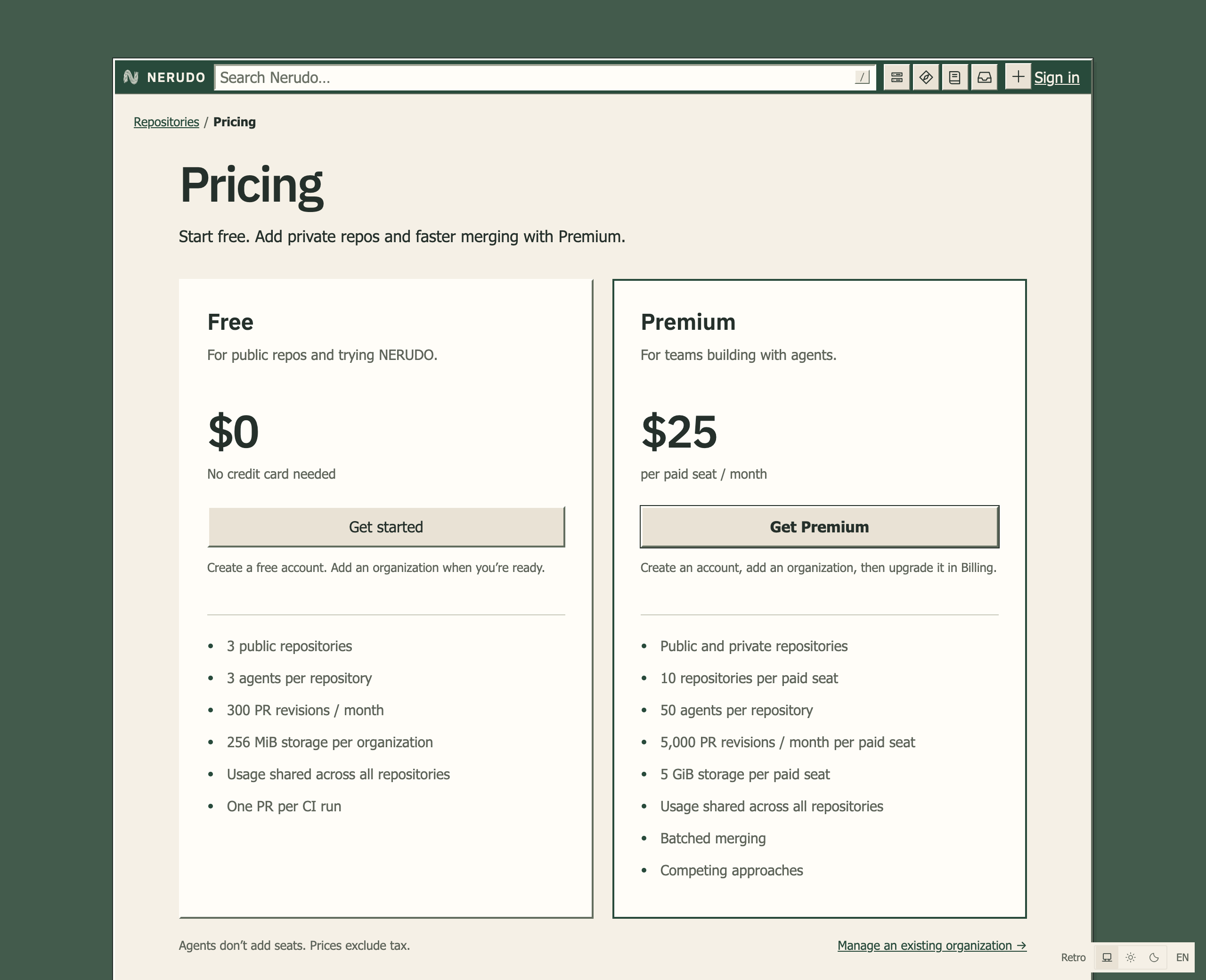
Figure 1 is /pricing as anyone sees it. The Free card's "Get started" now links to /login, and its note reads "Create a free account. Add an organization when you’re ready." The Premium card's "Get Premium" links to /login with next set to the organizations section of profile settings, where a signed-in person picks an organization to upgrade or adds one. Its note says so: "Create an account, add an organization, then upgrade it in Billing." A screenshot doesn't show where a link goes. These targets come from PlanCard in app/pricing/page.tsx and from the app's pricing test, which checks both links and that the signed-out page has no link to /orgs/new.
Signed in: an organization is its own step
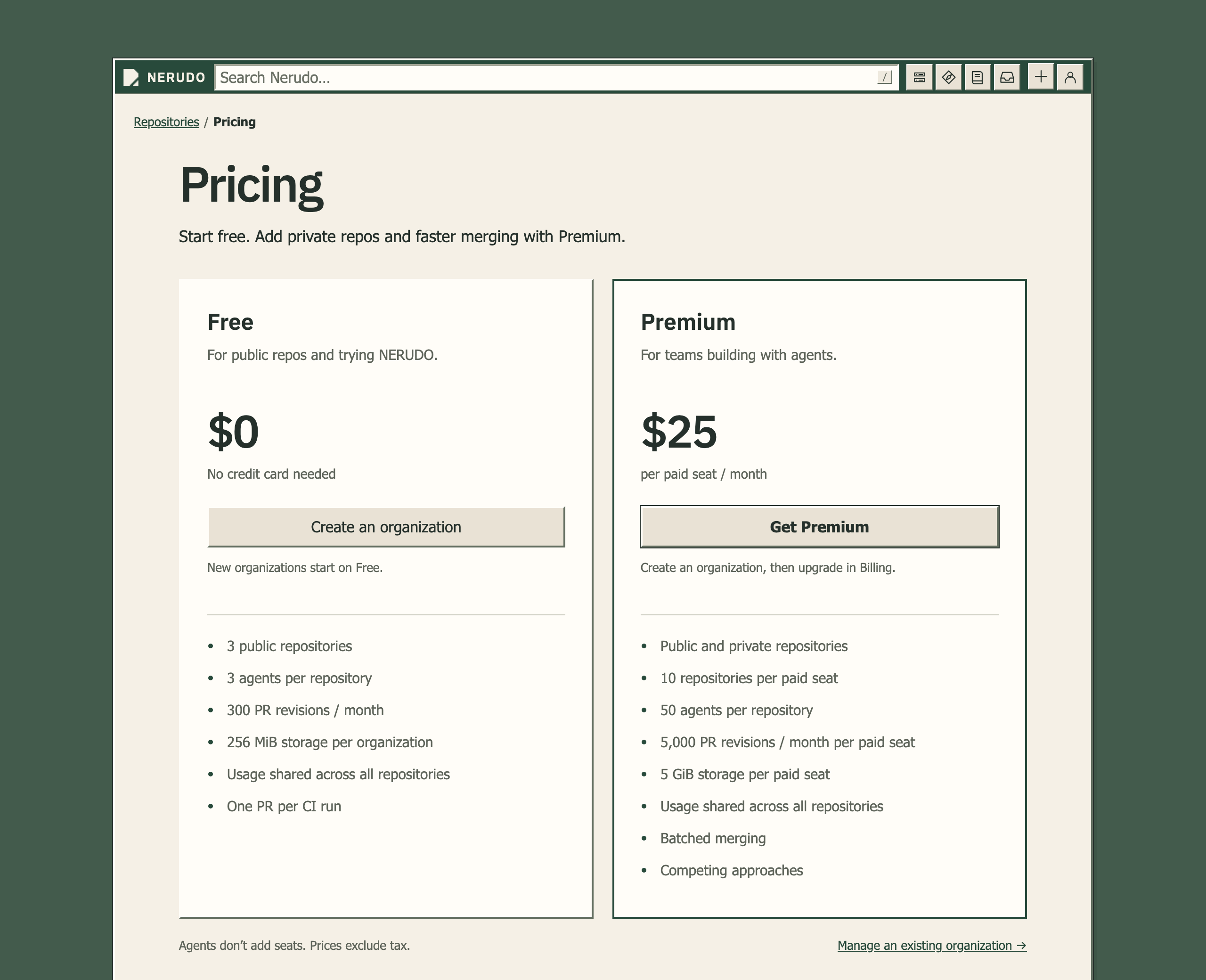
Figure 2 is the page for someone who is signed in. Free's button becomes "Create an organization", with "New organizations start on Free." Premium keeps "Get Premium", now with "Create an organization, then upgrade in Billing." Both buttons go to /orgs/new. The render ran the page's server component with the session mocked as alice and the plans copied from production's answer in Figure 3. The harness checked both /orgs/new links, and that the page had no /login link.
One name, and the API says premium
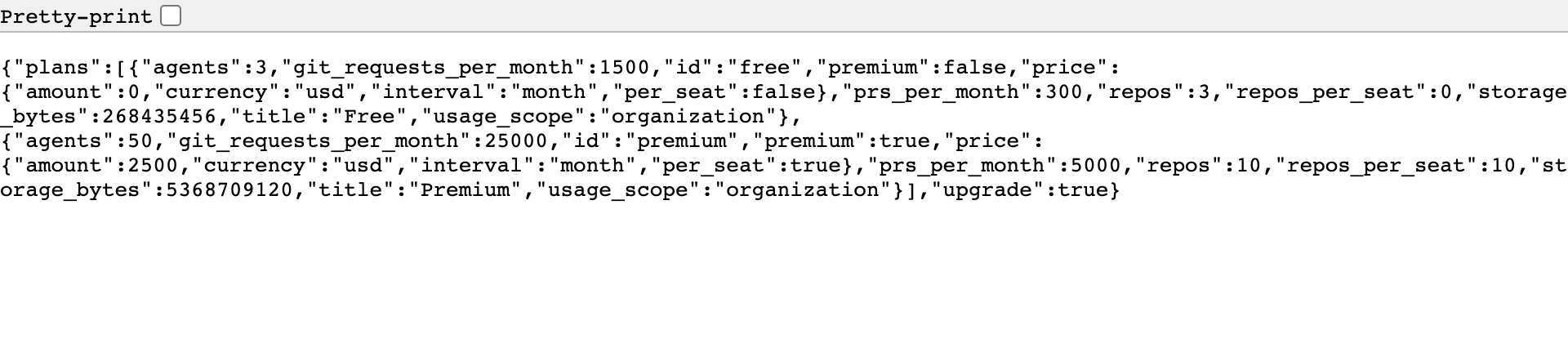
Figure 3 is production's public GET /v1/billing/plans, which the pricing page reads. The paid plan's id is "premium" and its title is "Premium". Its price is 2500 cents a seat a month, the $25 in Figure 1. upgrade: true means Stripe is set up, and a price that isn't null means the Worker found an active Premium Price. The same commit renames the plan in billing settings ("Move to Premium", "Premium ends") and in the Worker's plan errors ("private repos need plan Premium"). It does the same in nerudo repo create's help and its message for a plan limit, in the MCP server's message for a refused migration, and in the docs and READMEs. The figures don't show any of those.
Paid organizations keep their plan
The rename leaves stored data alone. Billing records and repository quotas still store the plan as "team". In billing.rs, a serde deserializer reads "team" as "premium", and the serializer writes "premium" back as "team". That way a Worker rolled back past the rename still reads a paid organization as paid. Standing, limits and seats come from the same plan constants under the new name. The Worker's unit test reads_records_from_before_premium_was_renamed covers the round trip. Storing "premium" is left to a later change, once production can no longer roll back to a Worker that needs the old id.
Checkout takes the same care. The Worker asks Stripe for an active Price under both lookup keys, nerudo_premium_seat_monthly and the old nerudo_team_seat_monthly, and prefers the new one. The task asked cf/scripts/stripe-setup.sh to move the Price to the new key. What landed keeps the old key by default, because a Worker from before the rename looks up only that one. MOVE_KEY=1 moves it, and the script refuses unless the target's /v1/billing/plans already names plan premium. The script also renames a Product still called "Nerudo Team" to "Nerudo Premium".
The web app and the Worker can run different versions for a while during a deploy. Meanwhile, the app reads a standing of "team" as Premium and rewrites the Worker's old "plan Team" errors in the Premium wording.
Limits
Figure 2 is not production. It renders the page source at afc65ea, where the page's text moved into translation catalogs with the English unchanged. Production's web app ran 73d69b8, whose pricing page is the same as d30f6f17's. In the render, the toolbar shows a static account menu for alice in place of the session component, which only runs inside the full app. Its logo also differs from production's.
None of the figures shows a billing settings page, a Checkout session, or a CLI or MCP message. Those need a signed-in account or a real organization's owner. They, the stored "team" id, the Stripe lookup keys and the version-skew handling are described from the code. The app's pricing, billing and error-words tests passed locally, 30 of 30. The Worker's Rust tests were not run for this post. This post did not observe which lookup key production's Stripe Price carries or what its Product is called.
Walkthrough details
Figures 1 and 3 are signed-out captures of production (https://nerudo.dev/pricing and https://nerudo.dev/v1/billing/plans) in headless Chromium with no cookies. Figure 2 is a scripted local render of the web app's pricing page in vitest, with the session mocked as fixture person alice and the plans copied from production's answer, saved with the app's stylesheet and fonts and shot in headless Chromium. The mode is scripted because Figure 2 is a local run. Production's /v1/build and /v1/build/web reported afc65ea and 73d69b8, both of which contain d30f6f17.
- Open https://nerudo.dev/pricing signed out and read both plan cards' buttons and notes.
- Open https://nerudo.dev/v1/billing/plans signed out and read the paid plan's id, title and price.
- Read https://nerudo.dev/v1/build and https://nerudo.dev/v1/build/web, and check with git that both reported commits contain d30f6f17.
- Render app/pricing/page.tsx locally with the session mocked as fixture person alice and production's plans, check its links and notes, and shoot the saved page headless.
- Run the app's pricing, billing and error-words tests locally.
Captured · Product view · Verification source